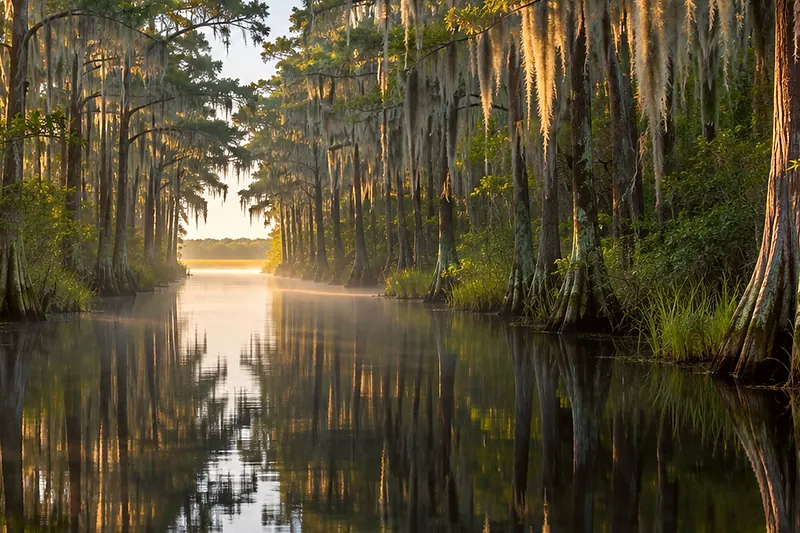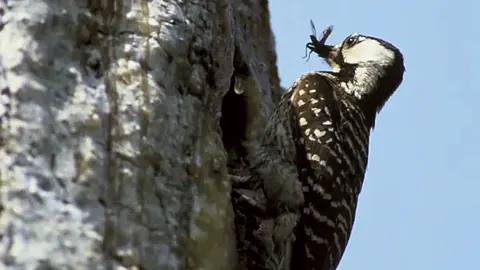
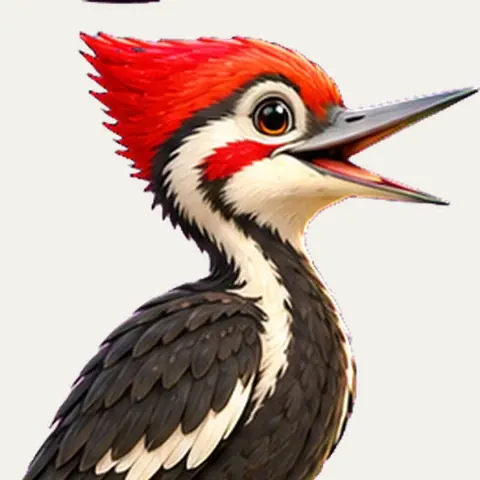
The red-cockaded woodpecker is listed as threatened. The refuge is part of a recovery population for the bird. It shares that population with the Osceola National Forest. It is one of twelve primary recovery populations.
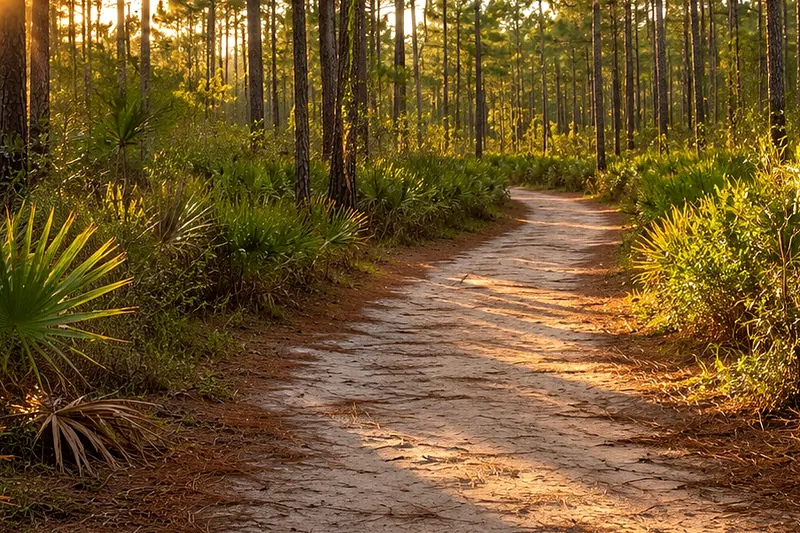
About fifty-two clusters of cavities are active on the refuge, as of twenty twenty-one. Each cluster is a family group. They live here year-round. They dig their cavities in living pine trees sixty years old or more. Suitable habitat is longleaf pine savanna.
Early reports said the bird was not abundant here. As mature timber was cut, the birds gradually began to use refuge uplands. Prescribed fire, brought in during the nineteen sixties and seventies, significantly improved their habitat. Then in the early nineteen nineties, neighboring pine stands were clearcut and replaced with short-rotation plantations. That left small isolated refuge stands as the only habitat.
Today refuge employees install artificial cavities to add to the natural ones. Moving birds from place to place has successfully increased the population. And the refuge is buying land around the swamp when it can.
Their cavities are used by insects, frogs, snakes, small mammals and other birds. Trees with white paint rings are red-cockaded woodpecker cavity trees. Please give those trees room.