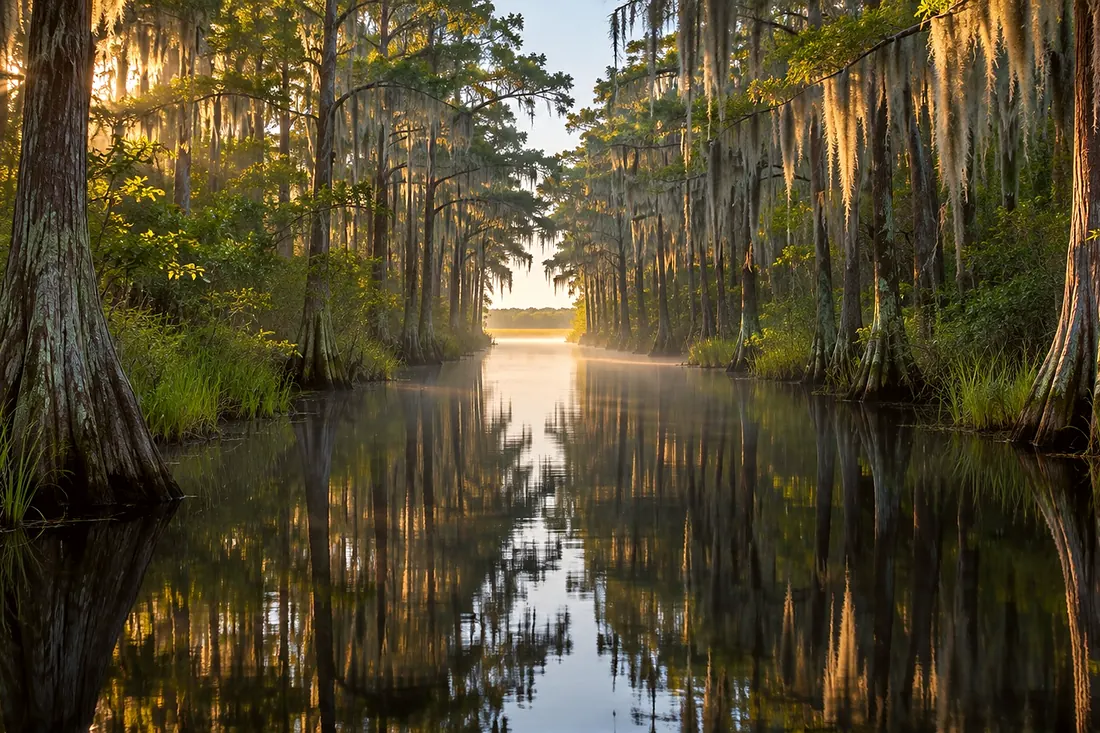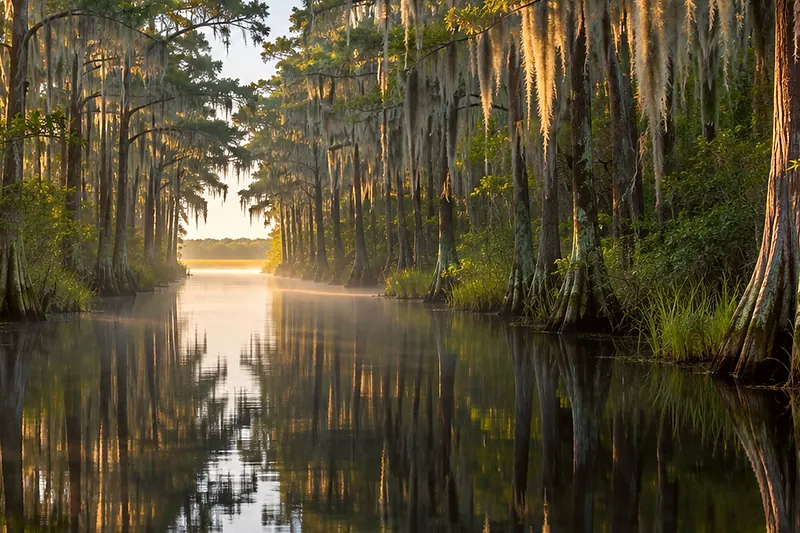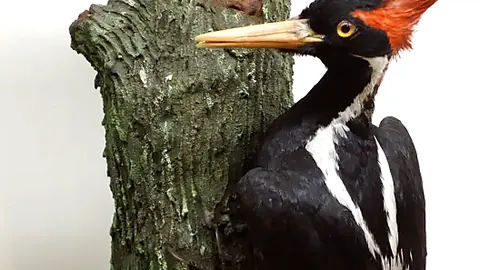
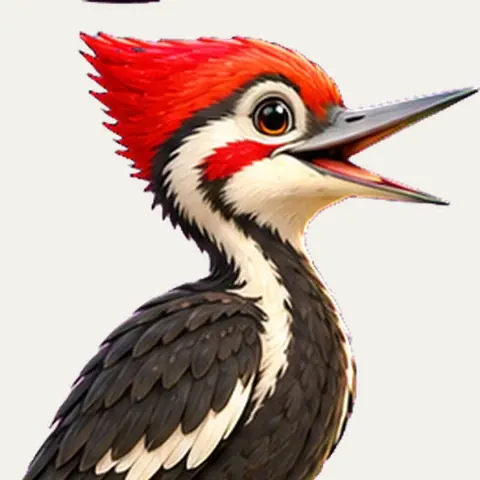
The ivory-billed woodpecker is North America's largest woodpecker. It is believed to be extinct, though unconfirmed reports still come in. It once lived in swamps from southeastern North Carolina to eastern Texas. It fed on wood-boring insects under the bark of dead or dying old-growth pine and hardwood.
Most of the ivory-bills seen in the swamp were near Minnies Island. John Hopkins saw several while cruising timber. He was working for the Hebard Cypress Company, between nineteen oh one and nineteen oh three. In nineteen twelve, a wounded one was taken and presented to refuge manager John Hopkins. A biologist saw one in nineteen forty-one and again in nineteen forty-two.
The bird has not been seen on the refuge since nineteen forty-eight. It is very unlikely the species persists, because the forests were degraded in the early nineteen hundreds.
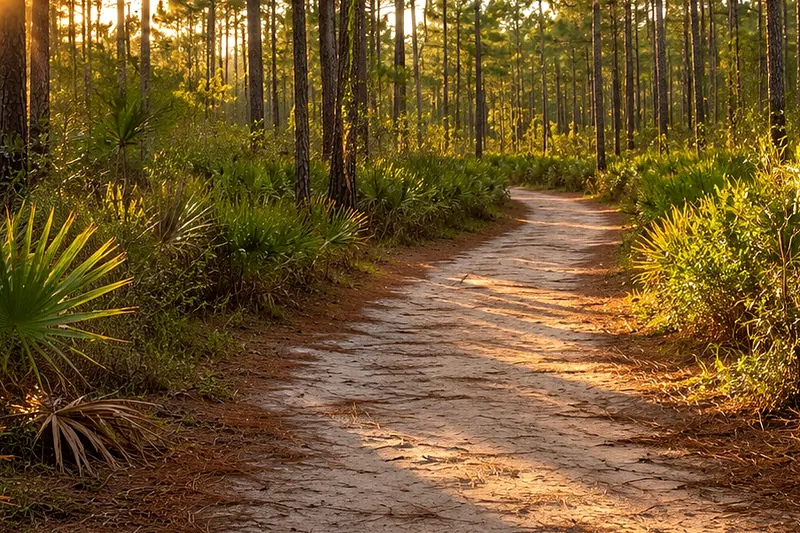
But habitat that could support it is returning on refuge lands. Recent fires have also created expanses of dead wood suitable for foraging. The nomination says reintroduction or natural spread is possible, if the bird still exists.