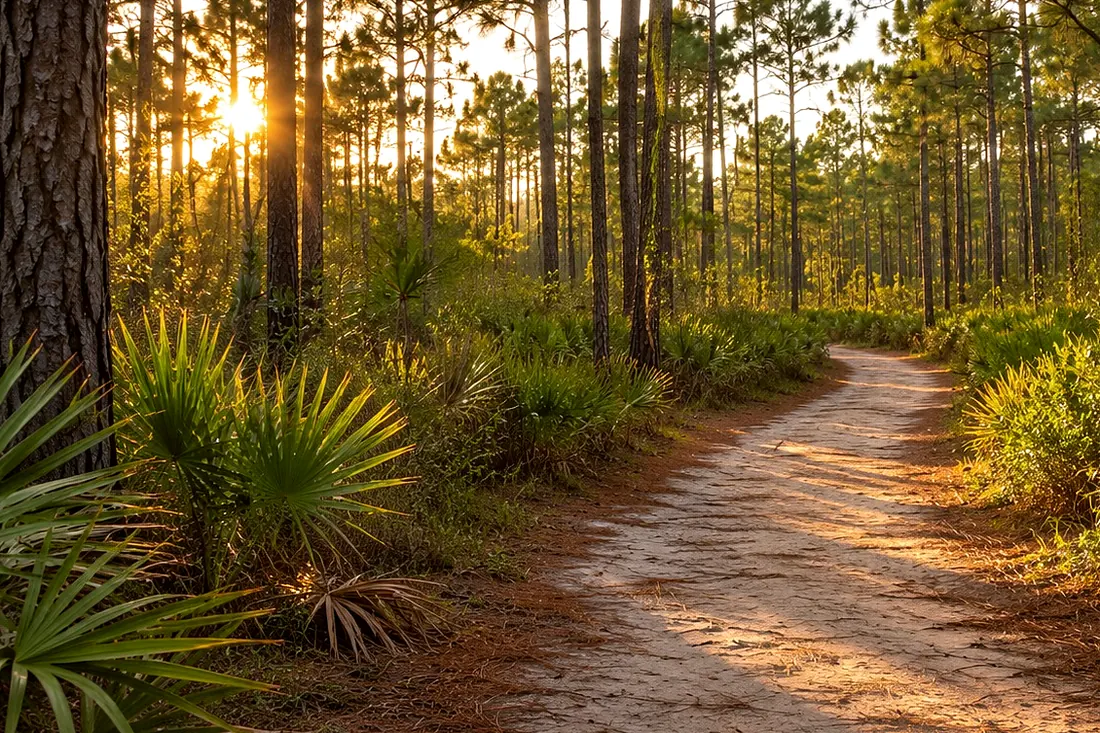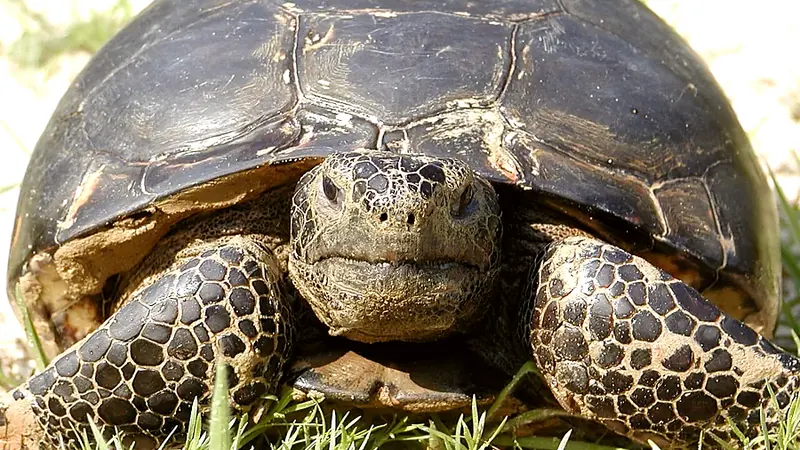
The gopher tortoise lives in the Coastal Plain from South Carolina to Louisiana. It has declined over most of that range. It is the only tortoise species east of the Mississippi River. It lives on well-drained sandy soils that support fire-dependent plant communities. And it is known to eat more than three hundred species of plants.
Its tunnels average about fifteen feet long. They protect it from temperature extremes, drying out, and predators. Sixty vertebrate and three hundred two invertebrate species have been recorded using the burrows. The burrows shelter insects, amphibians, snakes and small mammals. In most refuge uplands the water table is relatively high, which limits how deep the burrows can be. Shallow burrows in sandy soil are thought to be held in place by the roots of saw palmetto.
A tortoise lives sixty years or more. Females do not mature until ten to twenty years old. Then they lay a single clutch of about six eggs a year. Eggs and hatchlings are heavily preyed on. So recovery is slow. An estimated four hundred nineteen tortoises have been documented on the refuge. The main causes of decline are habitat destruction and degradation, and human predation.
Georgia and Florida list the gopher tortoise as threatened. It is listed as vulnerable on the IUCN Red List.
If you see a tortoise, do not touch it. Never block a burrow's entrance or exit, because that would lead to the tortoise's death.