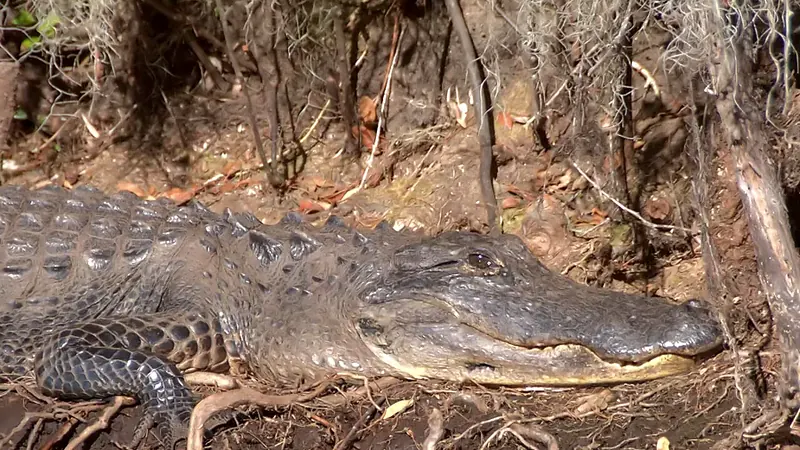
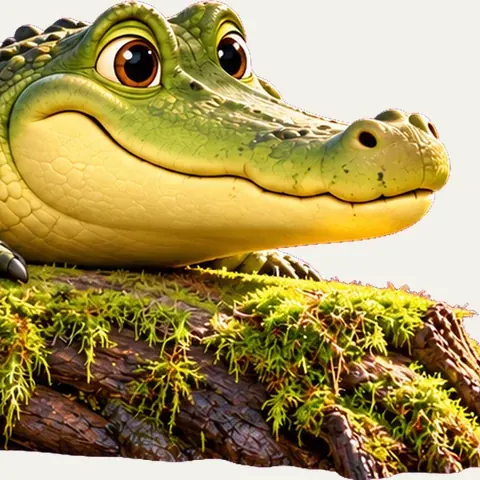
The Okefenokee has one of the largest populations of the American alligator. The only other alligator species in the world lives only in China. The swamp is estimated to hold ten thousand to twelve thousand alligators. That number moves up and down with drought.
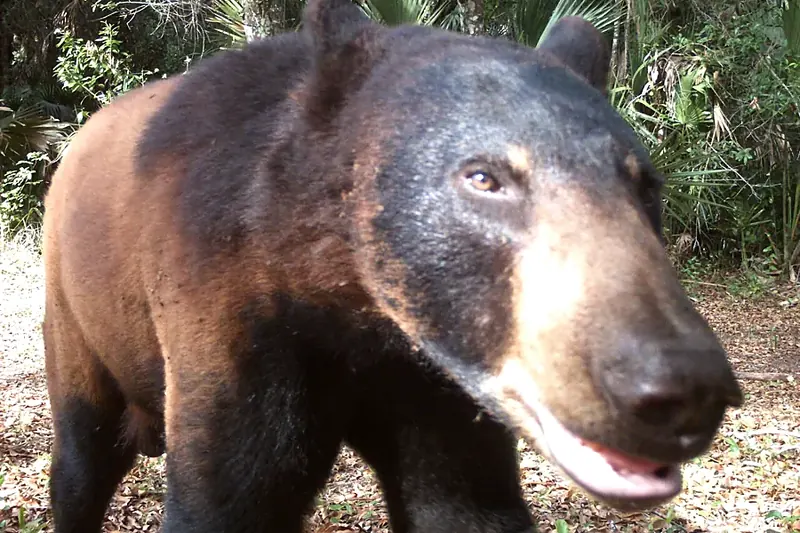
Alligators are the landscape architects of the swamp. They dig pools out of the peat and cut trails through it. Other animals use those pools and trails, most of all in a drought. Alligator eggs feed raccoons and black bears. And the alligator is a top predator, which makes it a keystone species.
Alligators were once here in tremendous numbers. In the middle eighteen hundreds, demand for alligator hides began to grow. Hides became shoes, boots and saddlebags. Millions were killed. By the middle of the next century, the alligator was nearly gone over most of its range. In the Okefenokee, the numbers stayed in good shape through the nineteen sixties. The nomination says that may be because so much of the swamp is remote.
The Endangered Species Act of nineteen seventy-three controlled the shipment of alligators and hides across state lines. In nineteen eighty-seven the alligator came off the endangered list to threatened. The nomination calls it an excellent example of successful conservation and recovery.
Now the safety part. Where there is water, there are alligators. Keep a safe distance, never approach them, and never try to feed them. Feeding alligators is illegal in Georgia. A fed alligator starts to link people with food. And a mother alligator is a very protective parent.