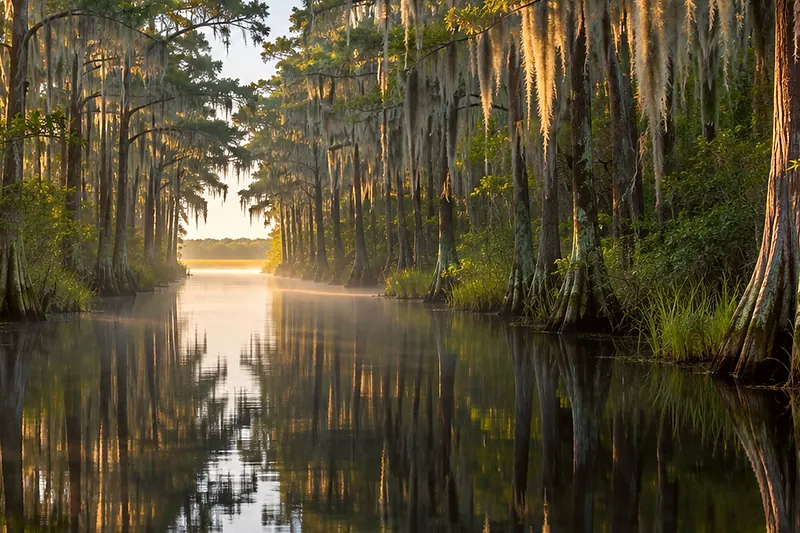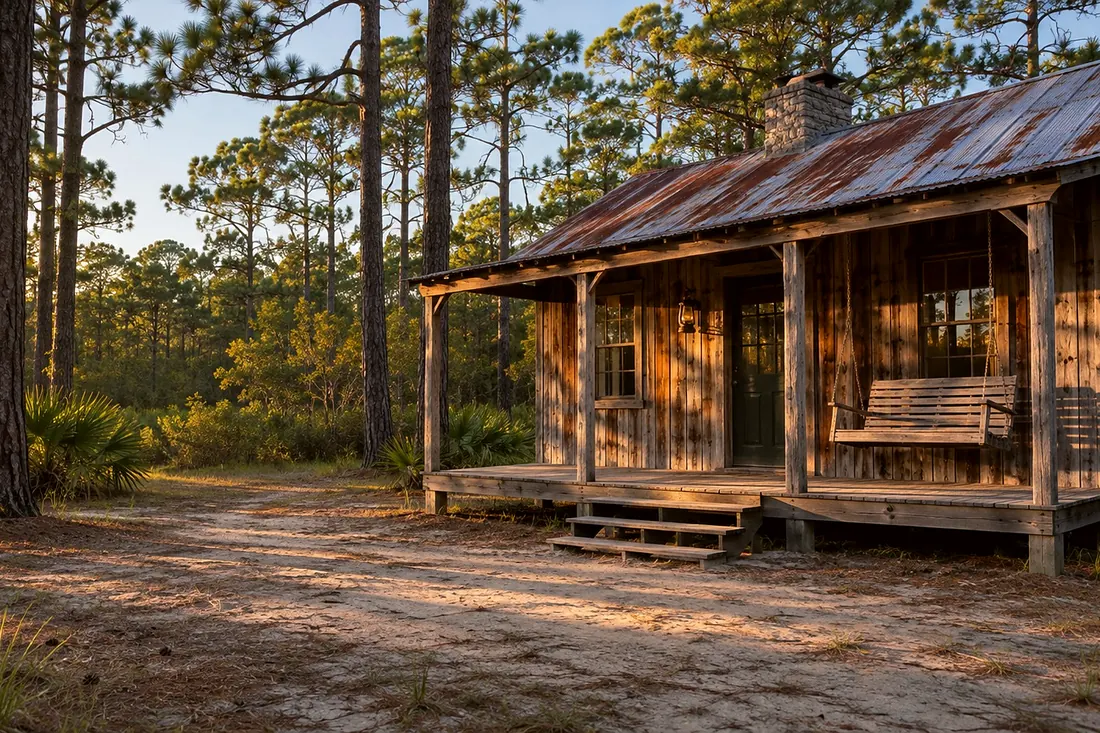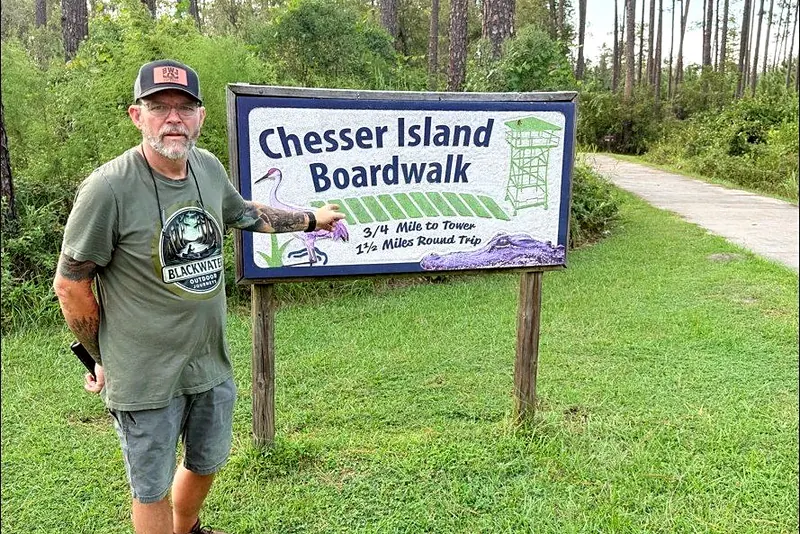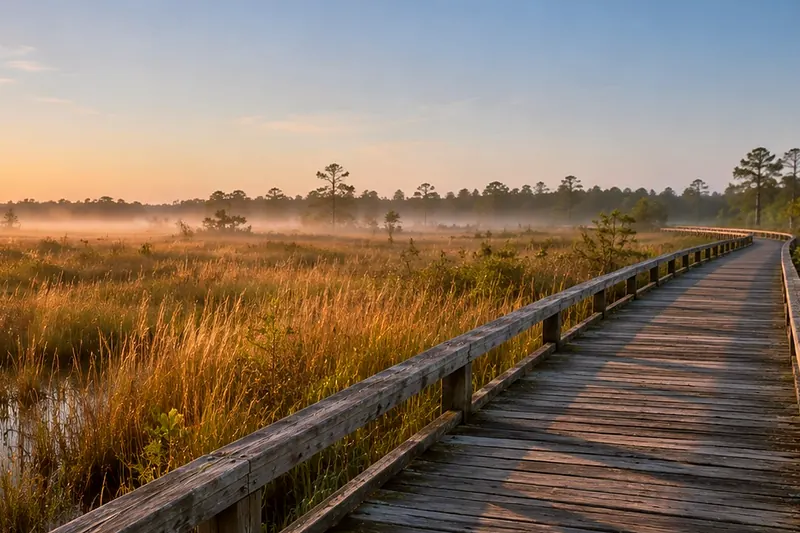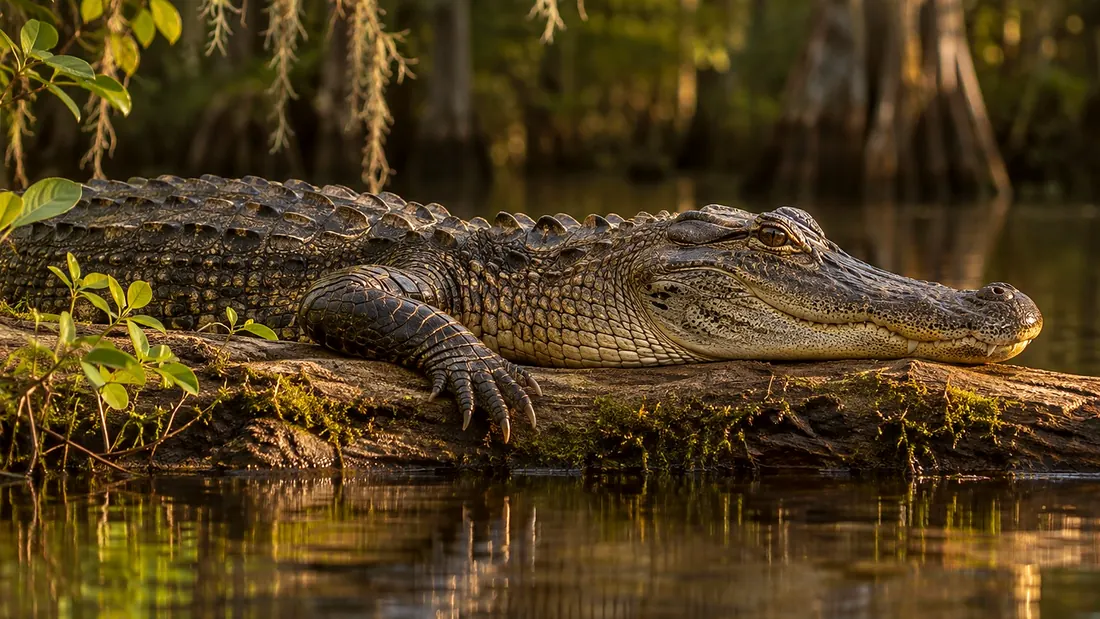
There's another part of this swamp's story. The alligator.
Alligators were once here in tremendous numbers. At first they were a nuisance to settlers. Later they were a means of livelihood. In the middle eighteen hundreds, the demand for alligator hides for shoes, boots and saddlebags began to grow.
Hide hunting killed millions of alligators from the mid-eighteen hundreds into the mid-nineteen hundreds. In Florida and Louisiana, between eighteen eighty and nineteen oh four, alligator numbers fell by eighty percent. By the middle of the nineteen hundreds, the American alligator was practically gone over most of its range. The exception was where it had strict protection.
Numbers kept falling even after state protection laws in the nineteen sixties, because of illegal hunting.
Here in the refuge, alligator numbers stayed in good condition through the nineteen sixties. That's despite a lot of illegal hunting. The text says that may be because vast areas were remote, and out of reach of hunters.
Then the law caught up. The Endangered Species Act of nineteen seventy-three controlled the shipment of alligators or hides across state lines. In nineteen eighty-seven the alligator came off the endangered list to threatened.
Georgia started an alligator hunting season in two thousand three. It did not include the Okefenokee.
The alligator is a keystone species and one of the top predators in the swamp. Alligators here are estimated at ten thousand to twelve thousand, and the number moves with drought. Fewer alligators are found outside the refuge boundary as land use gets more intense. The text says alligators may control populations of animals like the round-tailed muskrat.
So the swamp held onto its alligators while much of the range lost them. Keep that in mind next time you see a gator on the bank.